The woman behind the legs
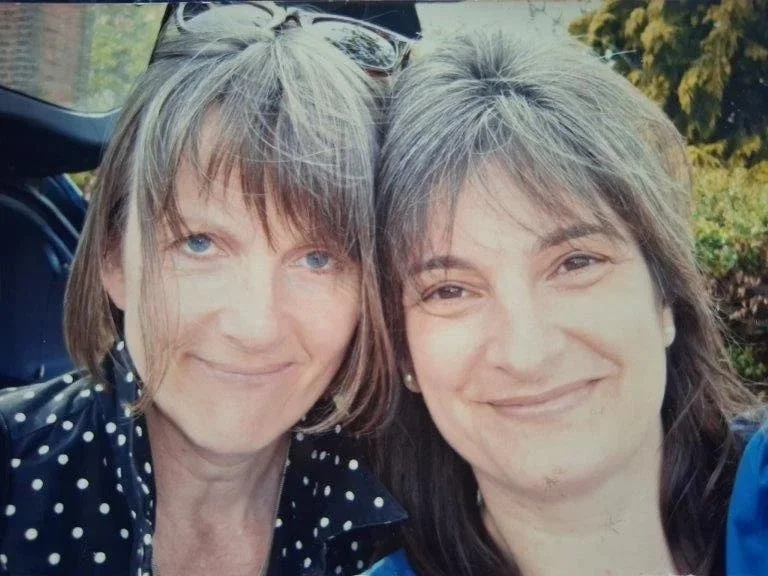
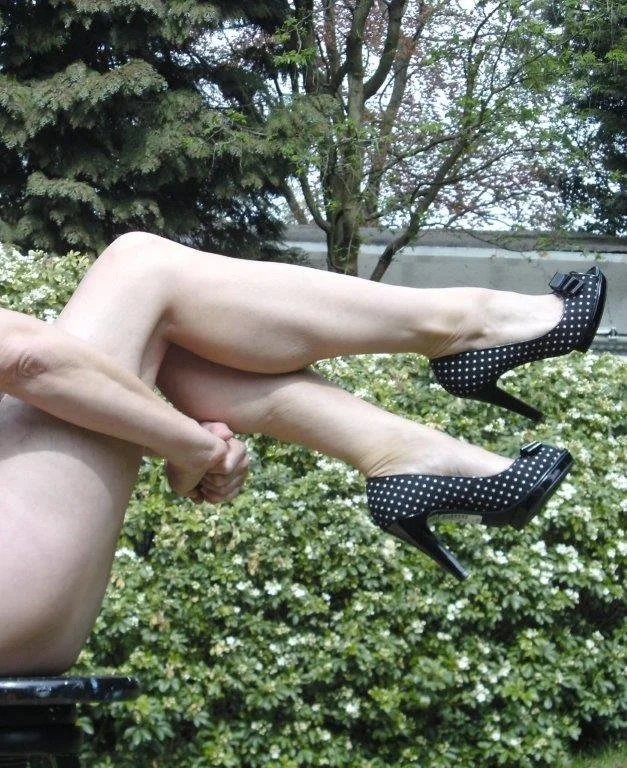
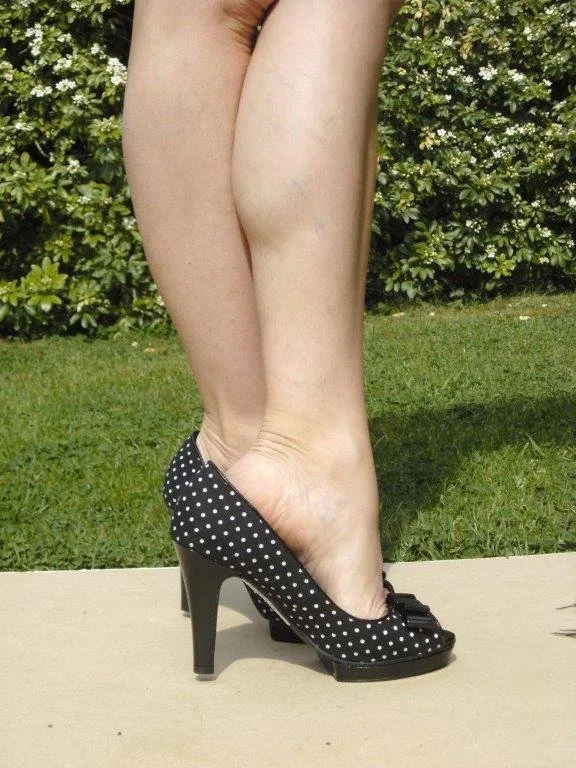
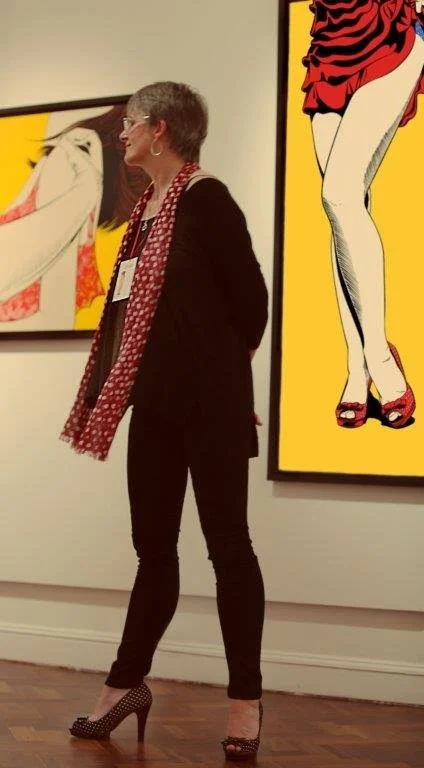
There is a woman behind almost every pair of legs Deborah Azzopardi has ever painted. She has been in Deborah's life for almost as long as Deborah can remember. A dancer, an actress, and someone who was, as Deborah puts it, simply made well. Tall father, shorter mother, the factory got the proportions exactly right. Long limbs, dancer's calves, the kind of legs that can climb walls and vault over things and still look extraordinary doing it.
Her name stays private. Her legs are everywhere.
"All of the legs I paint are mostly hers. Almost all of them. Her calf muscles are in my head."
Long Legs began the way desire often begins — with wanting something you can't quite name, and deciding to go shopping anyway. Marks & Spencer, Oxford Street. Underwear department, shoe department. The colours didn't quite match, but that's what paint is for. Back in the garden, Deborah took charge: lift the skirt higher, move your fingers like this, hold the pose. And she could. She always can.
"She's a natural. Whatever she wears, however she stands she looks great. She's the whole package."
But you don't get the whole package. That was always the decision. The painting gives you the skirt, hitched just so. The shoes. A suggestion of what's above and below. Enough to make you lean in. Not enough to satisfy.
"I want to tease, and I want to annoy, and I want to suggest. That's the power of it. You see just enough to want more."
This is desire working as it actually works. Not delivered, but withheld. Not the thing itself, but the knowledge that the thing exists. The woman in the painting knows exactly what she's doing. She always does.
She photographed the session, many photographs, never just one. Then the sketching, loose and mostly held in memory rather than paper, "I can paint better than I can draw". Then the canvas, board, paper or surface. Three and a half, maybe, four months, interrupted in-between life by cooking and children and the ordinary demands of a life lived alongside the painting. Compulsive, she calls it. But happy. And fun.
What makes this friendship unusual, beyond the four decades, beyond the legs appearing quietly in painting after painting like a hidden signature is something Deborah says almost in passing.
"I think, in reality, I think I'm her. But I'm not."
She means it as a joke. She also means it completely. The muse has everything Deborah finds worth painting: the dancer's discipline, the easy elegance, the kind of presence that makes desire look effortless and costs nothing to perform. And here is where it gets interesting. Because Deborah is the one with the brush. She is the one who decides the angle, the height of the skirt, what gets shown and what doesn't. Her muse holds the pose. Deborah decides what the pose means.
This is how desire works in Azzopardi's paintings. It is never just the subject being looked at. It is the artist wanting, imagining, projecting. The woman in the painting knows something. So does the woman painting her. And both of them know that a glimpse, the right glimpse, at the right angle, with the skirt at exactly the right height, is worth more than the whole picture. Object and architect. The line between them, in this studio, in this friendship, has never been entirely clear. That ambiguity is not a problem to be resolved. It is the painting.
There is an artist called Terrence Cuneo that Deborah remembers who hid a mouse in every painting he ever made. She didn't plan to do the same. But there she is in the school reunion, in the legs of strangers, in almost everything.
"Maybe it takes forty years to know what you're doing," Deborah says. "It's interesting, isn't it."